
Marathon County Deeds and Their Work
The Register of Deeds in Marathon County records deeds and related instruments through the LandShark system. A deed names the parties. It also describes the land conveyed. Mortgages, liens, and easements work differently. They record a claim or right against the property rather than transferring ownership, so the document type matters as much as the date. Read the type and the legal description before treating any entry as a sale.
| Deed Type | What It Does | Common Use |
|---|---|---|
| Warranty deed | Conveys the described interest with deed warranties | Ordinary conveyance |
| Quitclaim deed | Transfers whatever interest the grantor has | Family or interest cleanup |
| Personal-representative deed | Conveys estate property through a representative | Probate administration |
| Termination of decedent's interest | Documents a death-related title change | Survivorship or estate transfer |
| Tax deed | Records a tax-deed transfer | County tax-deed process |
The Marathon County office also records mortgages, assignments, satisfactions, easements, certified survey maps, plats, liens, judgments, releases, correction instruments, and transfer-on-death designations. A mortgage release should follow payoff. Ask if one is missing. An absent release alone does not prove a debt still exists, so the Register of Deeds or a title professional can explain what the record means.
Marathon County's Five Search Routes
LandShark does not search by street address. Start in Ascent instead. There you can pull the PIN or the full legal description. Then pick the LandShark tab that matches the key you hold. The county guide lists Document, Name, Legal, Vol/Page, Parcel Id, Results, and Detail views. Search the grantor and grantee separately. A trust, company, spouse, or estate may appear under another form of the name. A second search under that variant is often needed. From each result, note the document number, type, recording date, parties, volume and page, parcel number if shown, and image route.
The online name index begins in 1989. The legal-description index starts in 1992. Document search reaches into the 1850s. A document number or book and page can therefore reach older material that a name query cannot find. A legal description may be a platted lot, a condominium, a metes-and-bounds tract, or a section-based description; it is not an address.
| LandShark path | Search key | Coverage or note |
|---|---|---|
| Document | Document number | 1850s to present |
| Name | Party last name | 1989 to present; search both roles |
| Legal | Full legal description | 1992 to present; not an address |
| Vol/Page | Volume and page | Enter page as four digits |
| Parcel Id | PIN or parcel identifier | Use full number where indexed |
How Fast Marathon County Posts a Deed
The index disclaimer says grantor-grantee and tract entries usually appear the next working day after recording. Images are generally available by noon on the next working day. Equipment trouble or high recording volume can delay those wall dates. A fresh closing may thus appear in the index before the image is ready, while Ascent may still show the prior owner for months.
LandShark calls its index a working index and warns of errors and omissions from the original document or indexing. It also says indexing receives double-entry verification after recording. Search more than one way if a result seems missing: use the parcel, legal description, both party roles, document number, and volume/page. Older originals may be hard to read because the legal legibility requirement did not begin until 1997. Light or blue ink can also reproduce poorly.
The LandShark disclaimer sets out index and image timing and cautions. Open the Marathon County LandShark portal to run the current document-index search shown here. A document image is a reproduction, not a repair for an unclear source page.
Open the Marathon County LandShark portal to search the recorded-document index shown here.
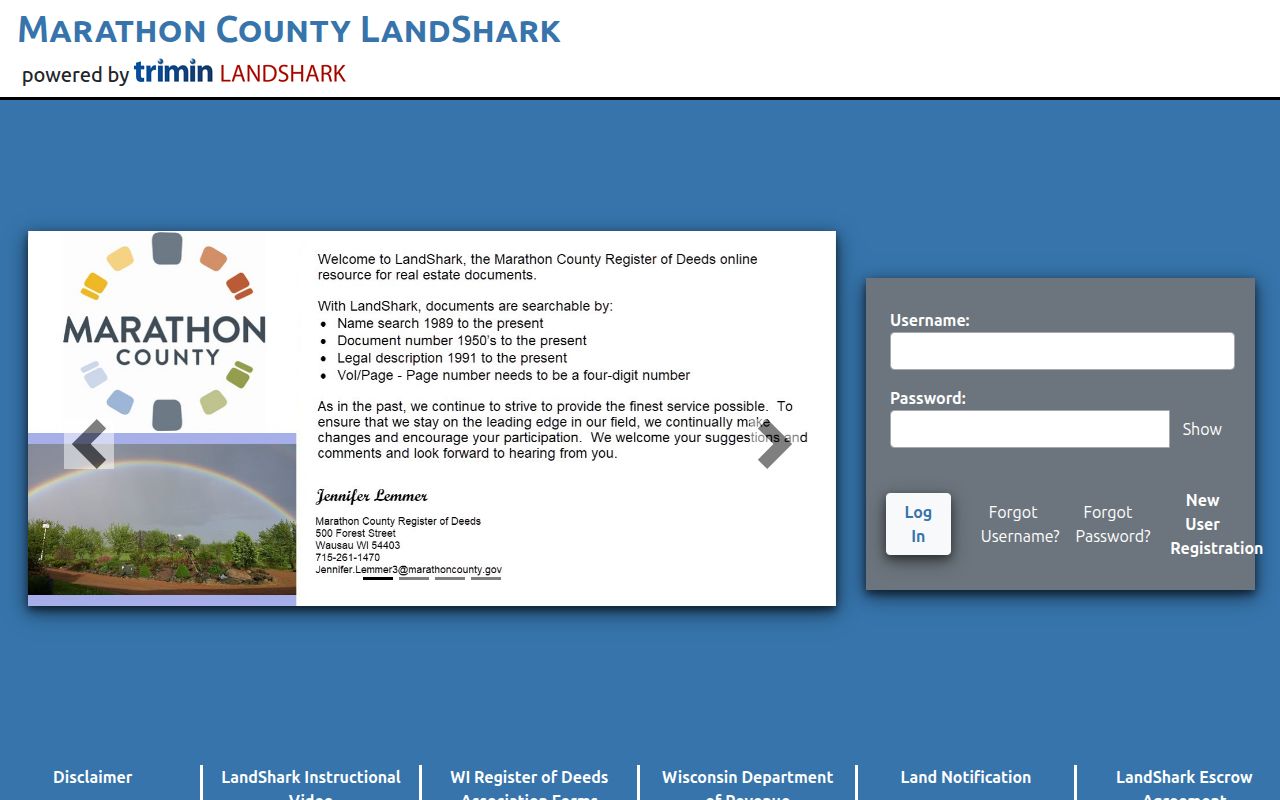
The LandShark image shows the recorded-document portal. Use its result details to carry a chain search back to the prior grantor.
Read the Marathon County Party Index
A grantor conveys the interest. A grantee receives it. Each deed appears under both names. A backward title chain still moves one transfer at a time. Marathon County's index can link the deeds, but the legal description must match too, since a shared surname or street name alone cannot join two records.
- Start with the latest recorded transfer and note its grantee, grantor, legal description, and recording reference.
- Search the current grantee and parcel to find the deed that conveyed the land to that person or entity.
- Take the prior grantor from that deed and search the name index again in the earlier period.
- Compare each description, then move to document number or volume/page when the name index ends.
- Grantor
- The party that conveys an interest in the deed.
- Grantee
- The party receiving the interest.
- Chain of title
- The ordered record of transfers for the same land.
- Volume and page
- An older book reference; a document number identifies a recorded instrument.
Estate Transfers in Marathon County
An estate transfer may not look like a sale between two people. The Register of Deeds lists personal-representative deeds, termination of a decedent's interest, and transfer-on-death forms among its land-record forms. Probate may name the representative, will, heirs, inventory, court approval, or deed direction that explains the recorded transfer. A transfer by affidavit may apply to solely owned Wisconsin property under $50,000; summary settlement and assignment have separate conditions described by the county.
A will must be filed with Register in Probate within 30 days, even when probate is not needed. Search WCCA for the case number and events, then ask the Clerk for a non-confidential inventory, order, or deed direction. Cross-check the resulting name and legal description in LandShark. The Register of Deeds records the land document, while the court file explains why a representative or heir signed it.
The county's probate information describes the local procedures. It does not provide legal advice about a particular estate.
Use the Wisconsin Circuit Court Access search to check the public case entry discussed here; a case result helps locate the court file but does not replace the recorded deed.
The Wisconsin Circuit Court Access search pictured here locates public case entries related to an estate transfer.
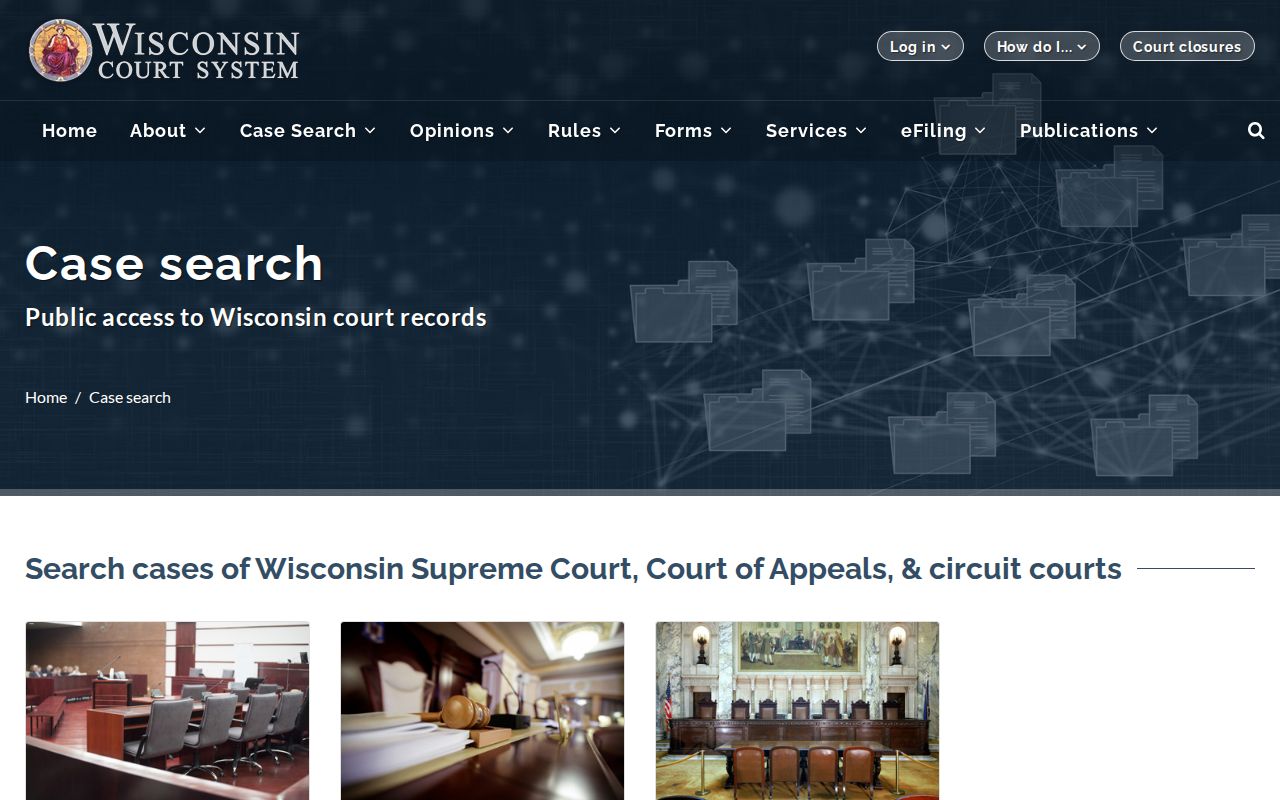
The court-search example shows a public case lookup. Follow the case number to the right court custodian for any documents open to the public.
Marathon County Tax-Deed Entries
A tax deed is only part of the file. The County Clerk coordinates notices and sales. The Treasurer handles postponed and delinquent taxes, while the municipal clerk can identify special assessments. LandShark records the tax deed and later transfers, and WCCA can point to in-rem foreclosure, bankruptcy, or other litigation.
A January 2026 county memo counted 89 parcels in in-rem foreclosure, 41 judgments transferring parcels to the county, and 43 parcels in the tax-deed process. Those figures are a snapshot. They are not a current list of available property. The county directs bidders to Wisconsin Surplus Online Auction and says each bidder must investigate the parcel. Search the PIN in Ascent for tax years and status. Ask the Treasurer for current delinquency details. Compare the LandShark tax deed with any court judgment. A record of sale does not resolve every lien, access, or boundary question.
Older Marathon County Deeds
The online name index stops at its 1989 start. Keep following the known legal description or instrument reference. The Document search reaches back to the 1850s. Older deeds often turn up through volume and page entries, tract indexes, original books, survey folders, and historical maps. For a rural parcel, use the full PIN with its section, township, and range; for a Wausau lot, a plat may show how the older parcel relates to a later street or lot number.
The Marathon County Historical Society holds maps from 1852, plats from 1882, directories from 1883, Sanborn maps from 1884, and telephone directories from 1899. Each source answers a different question. A directory can identify an occupant at an address. A Sanborn map can show the structure on the ground. A plat can show lots. None establishes title, but together they can locate the correct chain when an old address has changed. See the former-owner record path for the backward-chain method.
Request a Marathon County Deed Copy
The LandShark index is free. Images and print access can involve an account plus electronic or convenience charges. Use the amount shown in the portal at the time of the request. Counter copies follow the published schedule. It lists $2 for the first page, $1 for each added page, $1 for certification, and $2 for faxing. Recording costs $30 per document. That fee is separate from any copy charge.
The Register of Deeds counter is in the Marathon County Courthouse, 500 Forest Street, Wausau. Call 715-261-1470 with questions. Courthouse doors open at 7:30 a.m.; most departments work until 4:30 p.m., and many close at noon on Friday. A written request should name the parties, the parcel or full legal description, an approximate recording date, and the document type. State whether a plain image or certified copy is needed. Chain requests need one extra step. Ask staff to search both grantor and grantee sides.
Use the Register of Deeds forms and fee page to confirm current copy details before a visit or mail request.
Recorded, not guaranteed. LandShark shows the instruments indexed with the Register, not every unrecorded interest or every legal risk. A title search is the route for confirming clear ownership.