
Find a Marathon County Property Owner
An address in hand makes the search easier. Marathon County's public tax-parcel system, Ascent, is the starting point. The result gives the Owner(s) name, PIN, site address, mailing address, tax years, and status tags. An abbreviated legal description is included too. Freshness matters here. The tax roll is updated monthly. Yet the county says an ownership change can take a few months to show up. The latest recorded deed settles the question of who took title. It also shows what land changed hands.
This method finds the name attached to a parcel. A person, LLC, trust, estate, or representative can appear in different forms across the tax roll, business index, and deed. Never join two records by surname alone. Keep the PIN and full legal description beside each result. That way the owner search stays anchored to one parcel.
- Search the address, owner, or 14-digit PIN in Ascent and open the parcel card.
- Save the Owner(s) field, mailing address, PIN, retrieval date, and abbreviated description.
- Search LandShark by grantee, parcel, or legal description and compare the newest recorded deed.
- If the name is a business, confirm its legal name and status through Wisconsin DFI.
Marathon County Owner Card Details
The Ascent parcel card is where the ownership question gets answered. Its search result can show the parcel number, owner(s), site address, privacy-expiration date, and tax years. The tax detail adds more. Expect a mailing address, abbreviated description, assessment, taxing district, GIS link, and lottery-credit context. The display varies by parcel and privacy status. A missing name line proves nothing. Every parcel has an owner, even when the public card hides one.
The Ascent parcel detail route opens the selected tax parcel. The official county card starts the ownership check.
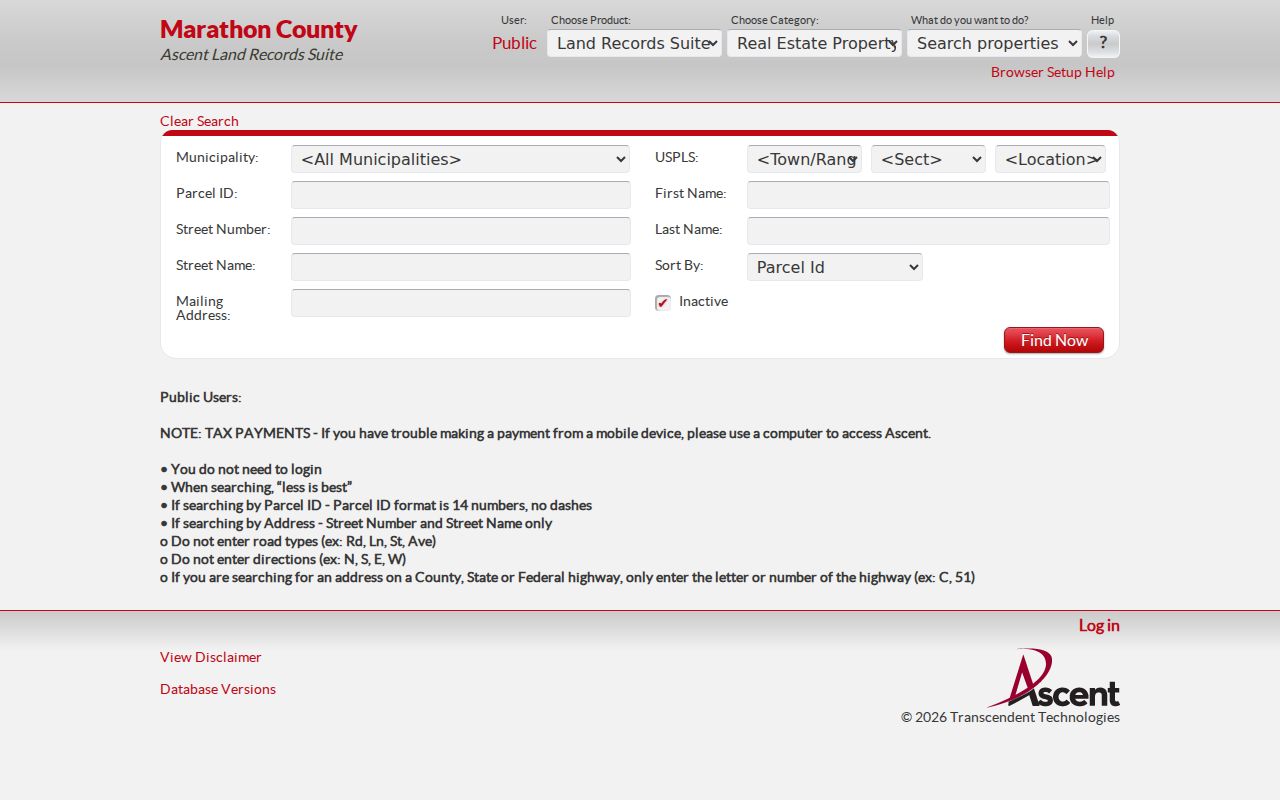
Treat the parcel detail as a locator. Carry its PIN into the recorded-document index before relying on the owner the card lists.
Marathon County Owner Record Sources
Each local source answers a different piece. The assessor roll lists the tax owner. The deed names the grantee on the recorded transfer. GIS labels help locate a parcel, but a map label never replaces the parcel's own Ascent record. For an entity owner, DFI confirms the filing name and registered agent, not beneficial ownership.
| Source | Owner Info It Gives | Access |
|---|---|---|
| Ascent tax parcel | Owner(s), site and mailing address, PIN | Free public search |
| LandShark deed index | Grantee, grantor, instrument, legal description | Free index; images can cost |
| Wisconsin DFI | Entity name, status, registered agent, filings | Public corporate search |
| County WebGIS | Parcel shape, owner label, address, Tax Report link | Free viewer |
An owner of record can be an LLC or a trust. Tax mail may go elsewhere. The named owner is not the occupant. The public roll can lag a recent deed, so compare recording dates and legal descriptions before treating a result as current title.
Ascent splits these details. It separates the property location from the tax-mail destination and may show privacy or parcel-status tags beside the owner's name. Those flags shape what appears. They are no substitute for a deed or a complete statement of title. A missed address search happens too. Try the full PIN or search owner names in the municipality instead of assuming a blank result means no listed owner.
Company Owners in Marathon County
Company names trip up many searches. Ascent's form has First Name and Last Name fields, and the county says a company name goes in Last Name. Search the exact form on the parcel card. Try a version without punctuation too. Trusts, estates, and representatives appear as well. Keep the spelling intact, because LandShark indexes party names, not just people.
The Wisconsin DFI Corporate Records Search confirms an LLC's name, status, registered agent, and filing history. A registered agent is just the entity's contact. That person may not own or manage the land. Use DFI to explain a name variant, and use the recorded deed to see which entity received the parcel, because a business filing cannot replace the land instrument.
The Wisconsin DFI Corporate Records Search is the state's route for entity filings.
When a Marathon County Owner Name Lags
Timing explains most stale results. The county updates cadastral information monthly. An ownership change may still need a few months to reach Ascent. LandShark posts the index on the next working day after recording, with an image by noon on the day after that. After a recent closing, the deed is the newest source even while the tax roll still carries the prior owner.
Save both dates. Compare the land description to the parcel card. Search both sides of a transfer. Spelling, initials, trust, estate, and company variants hide owners, and the index disclaimer notes that errors and omissions can occur. A matching name without a matching PIN or legal description never identifies the right property.
Limits on a Marathon County Owner Search
A Marathon County tax record names an owner for listing purposes only. It says nothing about who occupies the house. It also stays silent on who stands behind a trust or LLC. Title questions need a deed chain and a formal review, not the tax roll alone. Privacy protections complicate things further. Safe at Home can shield a participant's address. Court orders or redactions may also limit any public result. Never try to work around a protected address through another property records source.
Lawful use. Use an owner name for a lawful property question or due diligence. Do not use public records to stalk, threaten, or harass anyone, and do not treat a tax-listing name as proof of occupancy or title.
Marathon County Mailing Address Limits
A parcel carries two addresses that serve different purposes. The site address fixes the property's location. The mailing address shows where tax notices go, and it may sit outside Marathon County. For a buyer or title researcher, that mailing address helps explain the tax roll. It is not an invitation to contact someone at home.
Only the owner of record can change an Ascent mailing address. The county process begins on the parcel card with Request Mailing Address Change. From there, choose Start Request, enter the updated information, and Send Request. Third-party change requests go unprocessed. For any other property record, contact the office that keeps it. Do not alter the roll.
The Wisconsin Safe at Home program offers a confidential address for eligible participants. A protected address is never an ordinary mailing clue.
Estate Names in Marathon County Records
A deceased owner's parcel can linger on the tax roll while the estate settles. Marathon County probate paths depend on how the property was titled. The will, the assets, and the heirs also shape the path. A transfer by affidavit may cover solely owned Wisconsin property under $50,000. Larger or contested estates may go through summary or formal probate instead. The county requires a will to be filed with Register in Probate within 30 days. This applies even without full probate.
Search the probate docket for the pieces that explain a transfer. Look for the representative, inventory, order, or deed direction. Register of Deeds forms include a personal-representative deed and a termination of decedent's interest. Match that instrument to the parcel's full legal description. A relative's name in a notice never settles who owns the land.
The Marathon County probate information outlines local estate channels. A complete present-owner check belongs on the current owner record page. The instrument itself is covered with Marathon County deed records.
Confirm a Marathon County Owner Name
A buyer verifying a seller's name needs care here. Compare the tax parcel to the most recent deed. Never trust a search result alone. Write down the PIN, the names, the document type, and the recording date. Include the full legal description. A different grantee form on the deed deserves a closer look. An LLC, trust, estate, or representative may explain the difference. Similar names do not mean the same party.
Deed indexes have their own limits. Entries can contain errors or miss a search result, and older images resist easy reading. LandShark suggests trying multiple search paths. A title company or attorney can do the title review a name search cannot. This approach builds a solid property-record trail. It also keeps the owner question tied to a parcel and an instrument.
Read the instrument itself whenever a name match matters. Confirm the recording reference, grantor, grantee, signing capacity, effective date, and legal description. Then compare each detail with the parcel card. A representative may sign for an estate or company. The tax roll often uses a shortened owner label instead. If a scan obscures a name or boundary description, contact the Register of Deeds. Use the document reference rather than filling the gap by inference.