
Trace a Marathon County Deed Chain
A former-owner search is a chain, not a name search in isolation. Pull the parcel's most recent deed first. Write down both names, grantor and grantee. The earlier grantee becomes the next name you test. The full legal description has to match at every step. A transfer naming a similar person but describing another lot belongs to a different chain entirely.
| Transfer step | Grantor to grantee | Instrument type | Volume / page |
|---|---|---|---|
| Latest recorded deed | Copy both parties from LandShark | Record the instrument type | Save the book/page or document number |
| Prior transfer | Use the prior grantee as the next name | Match the described land | Write the next reference |
| Older book entry | Search a documented name variant | Check original instrument | Ask the Register if needed |
Keep repeating the step. An index cutoff or a missing instrument will force you to another source. Never fill the gaps with guessed sellers or dates. For each transfer, log the recording date, document number, parcel ID, and deed type. Also record the complete legal description. The table you build is working evidence, not a title conclusion.
Marathon County Index Years Change by Search
LandShark's Document search spans the 1850s to the present. The online Name index only reaches back to 1989. Legal-description search starts even later, in 1992. That split matters when tracing former owners, because an older transfer may still surface by document number or a volume-and-page reference even when the name fails. Legal search runs off the land description, not a street address.
| Record path | Online reach | When it helps |
|---|---|---|
| Document tab | 1850s to present | Search a known document reference |
| Name tab | 1989 to present | Search grantor and grantee separately |
| Legal tab | 1992 to present | Search a full legal description |
| Volume / page | Older book reference | Continue when a name result is not available |
When the name window closes, ask the Register of Deeds about older deed books, original documents, tract entries, and volume-and-page references. The county cautions that the LandShark index can hold errors and omissions. Search more than one way.
Search Marathon County Names More Than Once
LandShark is a working index, so one search is rarely enough. Double-entry verification catches most recording errors. Yet a name entry or source document can still go wrong. Search under every angle you can. Grantor and grantee roles, initials, alternate surname spellings, business and trust forms, and the parcel number all belong in a Marathon County property records hunt when known.
Timing matters too. The index typically shows up the next working day after recording. An image may follow by noon that same day. Heavy volume or equipment trouble can slow both. Older originals pose a different problem: legibility was not required until 1997, and light or blue ink scans badly. Save the readable portions and ask for help with anything unclear. The LandShark disclaimer explains wall dates and index limits. The recorded document portal is the official starting point for a Marathon County property search. Use the Marathon County LandShark portal to run the recorded-document search.
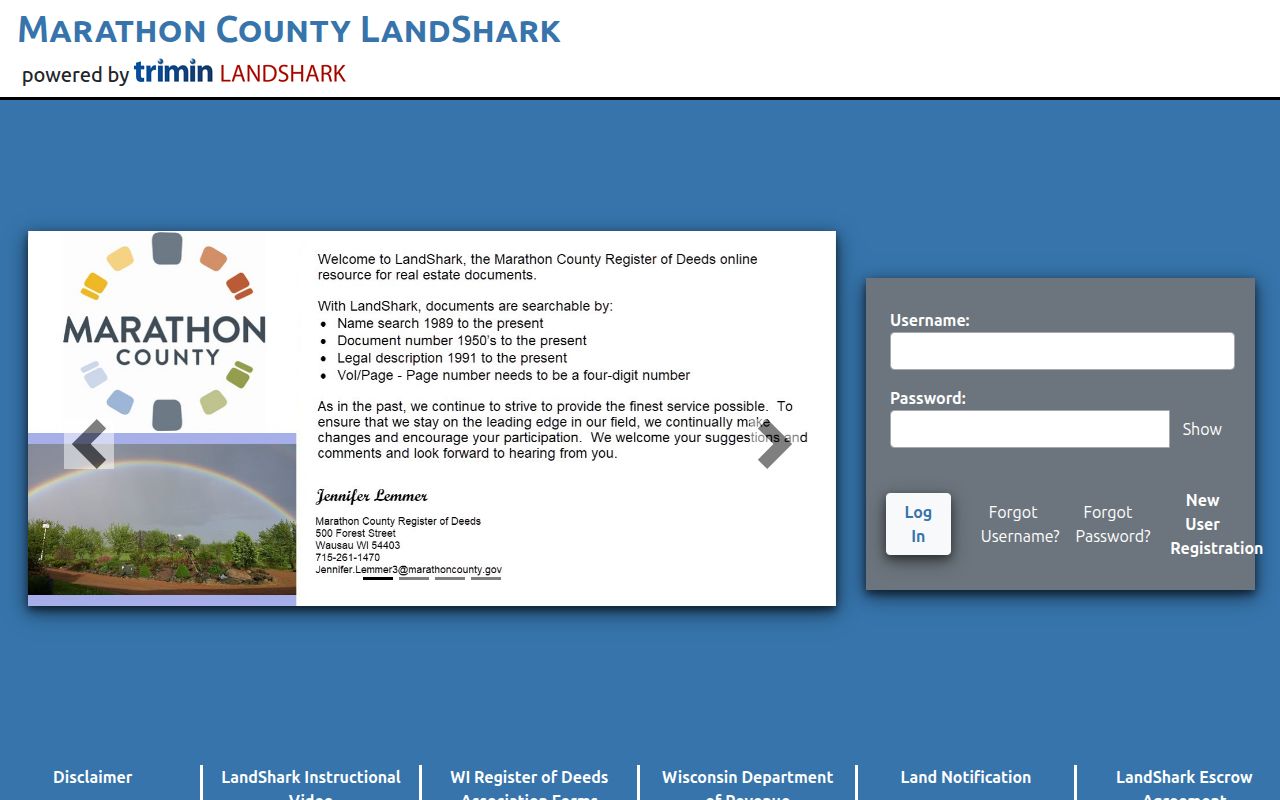
The LandShark image shows the document search screen that traces one instrument in an ownership chain of Marathon County deed records.
Walk Back Through Marathon County Deeds
Open with the current deed and step back one conveyance at a time. Each grantee becomes the lead for the next earlier transfer. Lots can split or combine over the years, so legal descriptions shift. Compare the land text on every instrument. Do not join the chain by a street address alone.
- Save the present Ascent PIN, mailing and site addresses, abbreviated description, and retrieval date.
- Find the latest deed in LandShark and record its parties, date, type, number, and description.
- Search the deed's grantor as the grantee on the prior transfer, then compare the land described.
- At the 1989 name-index edge, switch to document number, volume/page, original books, and older reference sources.
- Grantor
- The party conveying an interest.
- Grantee
- The party receiving that interest.
- Chain of title
- The ordered transfers tied to the same parcel.
- Legal description
- The deed's land identity, which can outlast a street name.
Marathon County Maps Bridge Old Addresses
The Historical Society Research Library holds maps from 1852, plat maps from 1882, city directories from 1883, Sanborn maps from 1884, and telephone directories from 1899. Together they can connect an early address to a lot, building footprint, and occupant. A directory names a household at a point in time; a Sanborn map shows building use; a plat lays out lots. None proves who held title.
The Marathon County Historical Society map and library collection is the local route for those older materials. Use it to learn whether a street changed name or number, then return to LandShark with the full legal description. The deed remains the record that carries the ownership transfer.
The Historical Society's local maps and directories page describes the material pictured for house-history work.
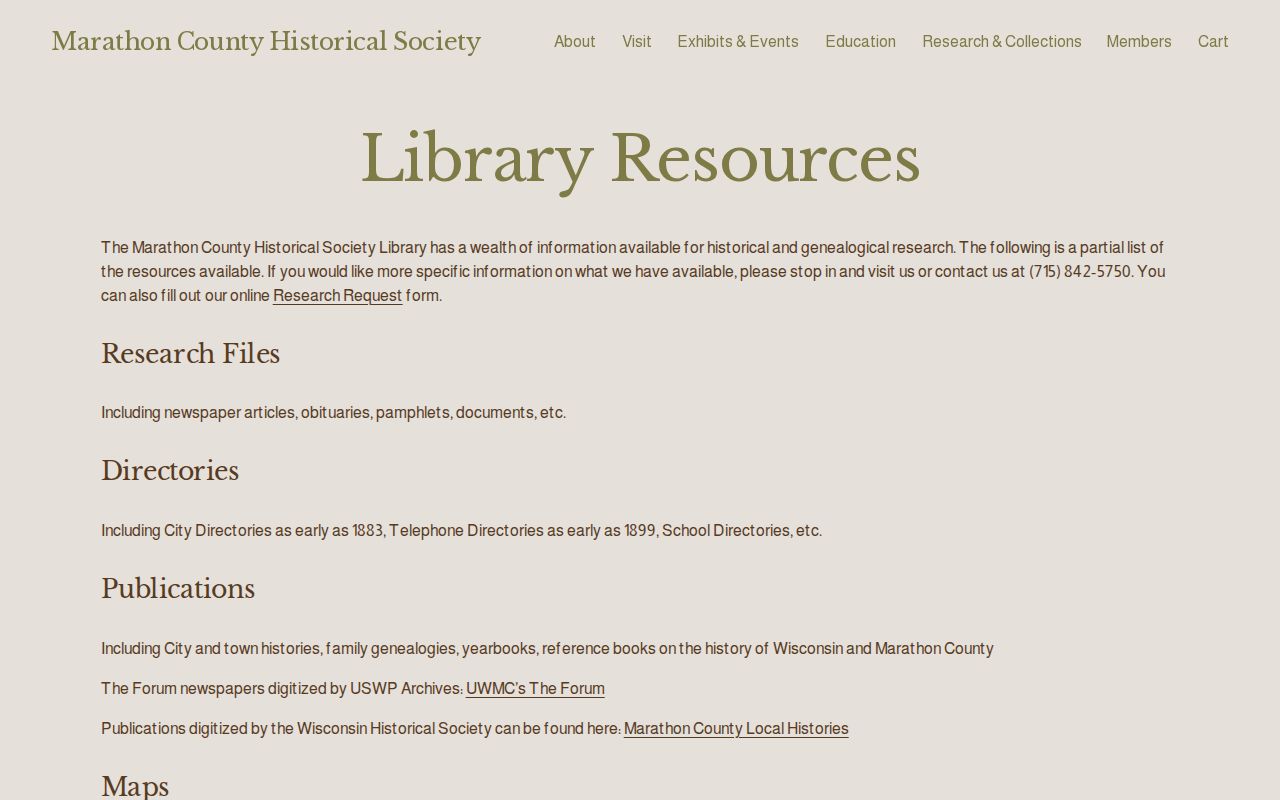
An old map can point you toward the right lot. The recorded plat or deed must still confirm that the parcel is the same one.
Probate Can Explain an Owner Change
Some ownership changes run through an estate rather than a conventional sale. Marathon County probate files may contain a will, personal-representative appointment, inventory, final account, heir list, sale approval, or deed direction. Recorded forms include a personal-representative deed and termination of decedent's interest. A transfer affidavit can apply to solely owned Wisconsin property under $50,000, while summary and formal proceedings follow different rules.
Use WCCA to locate the case, then request the actual non-confidential court document from the Clerk of Courts. A probate case can explain why the grantor is an estate or representative. It does not replace the LandShark deed, which records the land transfer. If a death record is needed, DHS or the county Register of Deeds applies separate access rules.
The Marathon County probate page describes local procedure. Wisconsin's in-person genealogy resource has separate historical index access and is not a certified deed source.
The Wisconsin DHS genealogy resource shown here provides historical index access for family-history research.
A genealogy index can hint at when a family event happened. The probate file and the recorded deed still decide what that event meant for the property.
Older Marathon County Deed Books
When a name search online hits its limit, stop guessing. Bring the last confirmed deed reference straight to the Register of Deeds. Ask about document-number search, volume and page, tract entries, original books, or an offline index. The counter sits at 500 Forest Street in Wausau. The Register's direct line is 715-261-1470. Come prepared with the parcel ID and the parties. Bring the full legal description, an approximate recording period, and the transfer type you want.
Older lots raise their own puzzle. A recorded plat or survey folder can translate an old lot and block. It turns that into the parcel number used today. The County Surveyor's files run by town and range. A document may not be online. Wisconsin's Public Records Law lets you direct a records request to the custodian. Before you rely on anything, ask what you are getting. Is it a plain copy, a certified copy, or a reference scan?
How Far Marathon County Owner Records Reach
The online deed document index reaches back into the 1850s. The name index, though, starts in 1989, and the legal-description index starts in 1992. Those two dates mark the practical edge of tracing former owners online. The limit applies by person or by legal text. Older material can still surface through the Register with a document number, a volume and page, a tract entry, or a book search. The Historical Society holds maps and directory sources that help explain a location. None of those prove ownership.
Log every gap between one confirmed conveyance and the next. Note the instrument reference you used. Record whether the index or the image was unavailable. Jot down which alternative name or legal search you tried. That paper trail lets the Register of Deeds pick up the chain from the last verified document. A title professional can do the same. Nobody then has to lean on a hunch. A family name or a street address alone will not carry the chain.
Lawful use. Former-owner research is for property history and lawful due diligence. Do not use a record trail to track, threaten, or harass a living person.